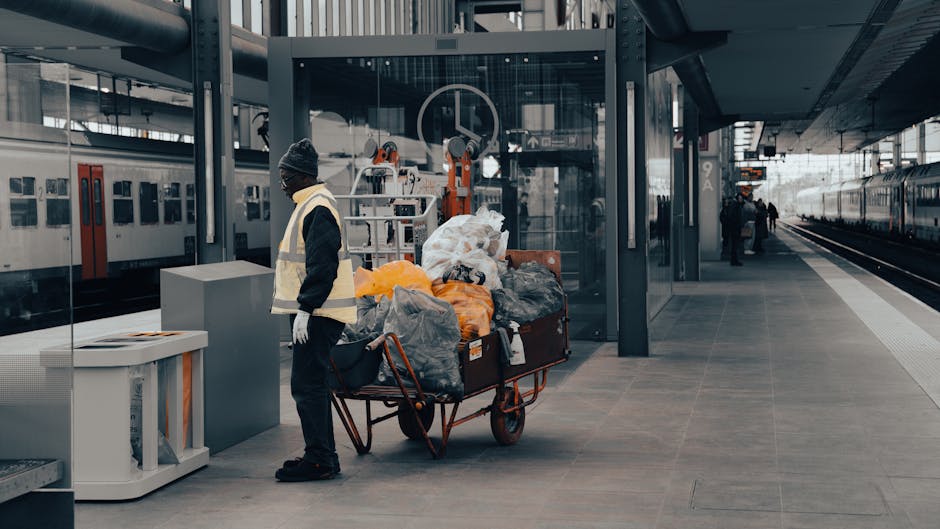
Rubbish collection at Gipsy Hill Station quick steps for commuters

If you commute through Gipsy Hill Station, rubbish collection probably is not the first thing on your mind. Fair enough. You are thinking about trains, timing, and getting home without the day turning into a slog. But when you are carrying a bag of waste, a broken chair part, old packaging, or a few bulky items you finally managed to sort out, the process suddenly matters a lot. Rubbish collection at Gipsy Hill Station quick steps for commuters is really about making that handover simple, safe, and low-stress.
This guide breaks down the practical side of it: what commuters need to know, how to prepare waste properly, what to avoid, and when a professional clearance route makes more sense than trying to squeeze everything into an already busy journey. If you want a smoother way to deal with unwanted items near the station, this is the kind of straightforward advice that saves time and a bit of faff.
Expert summary: the fastest rubbish-handling routine for commuters is usually simple: sort what you have, separate anything hazardous or awkward, confirm the collection method, and choose a drop-off or collection option that fits your travel pattern. Small steps, yes, but they stop the whole thing becoming a last-minute headache.
- Quick win: keep waste bagged, labelled, and easy to lift.
- Safety first: do not mix sharp, wet, heavy, or hazardous items together.
- Best for commuters: collections or clearances that fit tight time windows and station travel.
Why Rubbish collection at Gipsy Hill Station quick steps for commuters Matters
Station-area rubbish handling sounds like a tiny issue until you are standing there with a heavy bag, a wet cardboard box, or something you should really not leave lying around. Then it becomes a problem fast. Commuters need speed, clarity, and a route that does not add stress to an already full day.
Gipsy Hill Station sits in a part of London where people move quickly and space is limited. That means waste left outside, carried incorrectly, or abandoned for "later" can cause more than inconvenience. It can create mess, inconvenience for other passengers, and a bit of unnecessary tension for local residents and station users. No one wants to be that person trying to shuffle a leaking bin bag along the pavement at 7:45 in the morning.
There is also a practical side. If you are bringing waste from a flat, office, shop, or DIY job to deal with near the station, the main challenge is not the rubbish itself. It is time. You need a method that works before or after the commute, not one that hijacks the whole day.
That is why a commuter-friendly rubbish routine matters:
- It keeps your journey manageable.
- It reduces the risk of spills, smells, or breakages.
- It helps you avoid leaving items where they should not be left.
- It makes sorting and disposal feel less like a chore and more like a plan.
To be fair, most people are not looking for a grand waste management strategy. They just want the simplest sensible route. That is exactly what this article is designed to help with.
How Rubbish collection at Gipsy Hill Station quick steps for commuters Works
The process is usually more straightforward than people expect. You identify what needs removing, work out whether it is regular rubbish or something more specialised, then choose the most practical collection method based on time, volume, and access. The trick is to match the waste to the right path from the start.
For commuters, the common workflow looks like this:
- Sort the waste. Separate general rubbish, recyclables, heavy items, electronics, and anything potentially hazardous.
- Check the size and weight. A few small bags are one thing; a bulky item or a stack of broken furniture is another.
- Decide how quickly it needs moving. Same-day, next-day, or planned clearance each suit different situations.
- Prepare it for transport. Use sturdy bags, tape down sharp edges, and make sure nothing leaks.
- Choose the right collection route. That might mean a planned waste removal service, a flat clearance, or a specialist disposal option.
- Confirm access and timing. Station-adjacent streets can be tight, so it helps to know where items will be placed and when they can be collected.
In practice, many commuters are dealing with one of three scenarios: a small household clear-out after moving, office waste that needs removing after hours, or bulky items that simply will not fit into normal bins. If you are unsure which route to take, a general waste removal option is often the most flexible starting point, while a more focused service like flat clearance can suit larger domestic jobs.
One thing worth saying plainly: if an item is awkward, heavy, contaminated, or sharp, do not improvise. That is where delays and damage happen. Better to pause for ten minutes and do it properly than spend the next hour regretting the shortcut.
Key Benefits and Practical Advantages
When rubbish collection is handled properly near Gipsy Hill Station, the benefits are mostly about time and peace of mind. But there are a few less obvious gains too.
- Less commuting stress: you are not wrestling with awkward bags on platforms or buses.
- Cleaner home or workplace: waste disappears before it starts taking over the room.
- Better safety: fewer trip hazards, sharp edges, and spill risks.
- More efficient travel: you can plan the collection around your usual route.
- Reduced waste confusion: you know what is recycling, what is general waste, and what needs specialist handling.
There is also a subtle mental benefit. Sorting rubbish properly clears space, and not just physical space. Once the clutter starts leaving the room, people usually feel they can get on with the rest of the week. You notice it when the hallway stops looking like a storage unit.
If your waste includes old furniture, broken household items, or appliances, using the right disposal route matters even more. Pages such as furniture disposal, fridge and appliance removal, and mattress and sofa disposal are useful examples of how different items need different handling. One size does not fit all, annoyingly.
Who This Is For and When It Makes Sense
This kind of rubbish collection guidance is especially useful if you are one of the following:
- A commuter carrying household rubbish after a tidy-up or move.
- A renter clearing a flat between tenancies.
- A local worker disposing of office waste after commuting in.
- A homeowner with bulky waste that cannot wait for a normal bin day.
- Someone returning from a DIY project with offcuts, packaging, and mixed debris.
- A person managing recycling or residual waste from a one-off clear-out.
It makes sense when the usual bin system is too slow, too small, or simply not suitable. That is especially true for bulky items, mixed waste, or loads that need to be removed on a tight schedule.
For businesses, the situation can be slightly different. If you are moving materials linked to a workplace, business waste removal may be the better fit. If the job involves a workspace that needs clearing rather than just removing a few bags, office clearance can be more practical.
And if you are dealing with an entire property or several rooms, house clearance or home clearance may save a lot of back-and-forth. Truth be told, once a job gets beyond "a couple of bags," the simpler route is often the one that costs less in time and energy.
Step-by-Step Guidance
Here is the commuter-friendly version. Keep it simple and do the obvious things first.
1. Identify exactly what you need to remove
Start with a basic list. Not a vague "junk pile." Actual items. Bags of general waste, packaging, broken furniture, old appliances, garden debris, paper files, or renovation offcuts. If you can name it, you can plan for it.
2. Separate standard rubbish from specialist items
General waste can usually be handled differently from things like old fridges, chemicals, wet paint, sharp metal, or confidential paper. If you need secure document handling, confidential shredding is the sensible route. If you are dealing with risky materials, hazardous waste disposal is the safer option.
3. Make the waste easy to carry
Use strong sacks. Tie them properly. Tape sharp edges. Break down cardboard. Remove loose screws or bits of glass if you can do that safely. A tidy load is easier to move and easier to collect.
4. Check access around the station area
If collection is happening near a station route, think about access for vehicles, pedestrians, and any narrow spaces. You do not want a tidy plan to fail because the items were left somewhere hard to reach. It is the kind of detail people skip, then regret five minutes later.
5. Choose the right service level
Some loads only need simple waste removal. Others are better handled through specialist services such as builders waste clearance, garage clearance, or loft clearance. The more mixed or bulky the load, the more useful it is to match the service properly from the outset.
6. Book in a realistic time window
Commuters need timing that respects the working day. Early morning, lunchtime, or after-work windows tend to be the least disruptive. If you are arranging a larger job, checking book online can make that process easier.
7. Set the waste out clearly
Do not leave items scattered around. Group them neatly, keep pathways clear, and make sure the collection point is obvious. If items are in a shared building, communicate with neighbours or building managers so nobody gets surprised by a pile of old furniture in the corridor. Happens more than people think.
8. Confirm what happens after collection
Ask yourself whether the items are being recycled, reused, or disposed of. If sustainability matters to you, it should, the page on recycling and sustainability is worth a look. For many commuters, that extra reassurance makes the process feel more worthwhile.
Expert Tips for Better Results
In our experience, the easiest jobs are the ones prepared in layers. First sort, then pack, then move. It sounds obvious because it is. Yet people often try to do all three at once, and that is when things become messy.
- Keep one bag for "unknowns." If something needs deciding later, do not let it mix with everything else.
- Take photos before collection. Handy if you need to confirm what is going.
- Use smaller loads during commuting hours. One medium bag is much easier than three overstuffed ones.
- Never assume everything can go together. Appliances, mattresses, metal, and mixed household waste often need different handling.
- Think about weather. A wet morning can turn cardboard and paper into a soggy nuisance very quickly.
Small detail, but useful: if you are collecting waste after work, leave yourself enough time to deal with it before the evening rush. Rushing waste is how bags split. Then everyone is annoyed, including the pavement.
If you are clearing furniture or a larger room, planning around a specialist service can save more effort than trying to dismantle everything yourself. For example, furniture clearance is often more efficient than a do-it-yourself carry if the item is heavy, awkward, or likely to damage stairways.
Common Mistakes to Avoid
Some mistakes are tiny in the moment and expensive later. Here are the ones that come up most often.
- Leaving waste unbagged: loose rubbish is harder to handle and easier to spill.
- Mixing hazardous items with general rubbish: that is unsafe and can create disposal problems.
- Underestimating size: a "small clear-out" often becomes a bigger one once you start lifting things.
- Forgetting access rules: not every street or loading spot near a station is simple to use.
- Trying to do it in a hurry: that is when things get damaged or missed.
- Ignoring recycling separation: recyclable material mixed with general waste is a missed opportunity.
A surprisingly common issue is people assuming that because an item is broken, it is automatically normal rubbish. Not always. Electronics, appliances, mattresses, paint tins, and confidential paperwork often need specific handling. Better to ask than guess.
Tools, Resources and Recommendations
You do not need fancy equipment. A few simple tools go a long way.
- Strong rubble sacks or refuse bags
- Gloves with decent grip
- Parcel tape for sealing sharp-edged packaging
- Marker pen for labelling bags
- Fold-flat boxes for recyclable cardboard
- A trolley or sack truck for heavier moves, if you have one
If your load includes things like sofas, mattresses, fridges, or a mix of household materials, the relevant service pages can help you understand the best route before you book. For example, mattress and sofa disposal and fridge and appliance removal are useful when the waste is bulky but specific.
If you are comparing service providers, it is worth checking practical details rather than just looking at the headline promise. A clear pricing and quotes page, plus transparent payment and security information, can help you feel more confident before you book. You do not need surprises with waste removal. Nobody does.
For some jobs, the best "tool" is simply the right service category. A loft, garage, or home clear-out often becomes far easier when you stop treating it like a bin-run and start treating it like a planned clearance.
Law, Compliance, Standards, or Best Practice
Waste handling in the UK is not something to take casually. You do not need to become a compliance expert to deal with a few bags, but it helps to follow sensible best practice. In general, that means keeping waste secure, separating hazardous items, avoiding fly-tipping, and using a responsible disposal route.
For commuters and local residents, the main practical standards are straightforward:
- Do not leave rubbish where it could block access or create danger.
- Do not mix hazardous waste with household waste.
- Do not assume a station-side pavement is a free storage spot.
- Handle confidential material carefully.
- Use a provider that explains how waste is managed and disposed of.
If you are booking a company to handle the job, it is sensible to check their health and safety policy, insurance and safety information, and their published terms and conditions. Those pages do not solve the job for you, obviously, but they do help you understand what to expect.
Best practice also includes knowing when a job is beyond ordinary household collection. Builders' rubble, mixed renovation waste, or debris from a project near the station may be better suited to builders waste clearance. That is not being dramatic. It is just matching the waste to the right method.
Options, Methods, or Comparison Table
There is more than one way to handle waste near Gipsy Hill Station. The best choice depends on volume, type, and urgency. Here is a simple comparison.
| Option | Best for | Strengths | Limitations |
|---|---|---|---|
| Regular bin use | Small household rubbish | Convenient, familiar, low effort | Not suitable for bulky or mixed loads |
| Planned waste removal | Mixed bags, bulky items, awkward loads | Flexible and time-efficient | Requires booking and some preparation |
| Flat clearance | Large domestic clear-outs | Good for multiple items and room-by-room jobs | More planning needed than a simple bin run |
| Furniture or appliance disposal | Single large items | Efficient for specific bulky goods | Not ideal for general mixed waste |
| Specialist hazardous handling | Risky or regulated items | Safer, more appropriate, more compliant | Not the fastest option if the item is ordinary waste |
So which route should a commuter choose? If it is a few tied bags, keep it simple. If it is a flat, a garage, a loft, or an awkward pile of mixed items, use a service built for that sort of mess. That is usually the point where the "quick steps" become genuinely useful.
Case Study or Real-World Example
Picture a typical commuter on a Thursday evening. They have spent the week slowly clearing out a one-bedroom flat near Gipsy Hill, one cupboard at a time. By the time they are done, they have two bags of general rubbish, a broken bedside table, a small stack of flattened cardboard, and an old chair that has seen better days. It is not huge. It is just awkward.
Rather than dragging everything onto the train platform and hoping for the best, they sort the waste before leaving home. Cardboard gets bundled flat. The broken furniture is separated. The bags are tied properly. They check the collection route and book a suitable clearance slot that fits around their commute. No drama, no guessing.
By the end of the evening, the flat feels bigger, the hallway is clear, and the waste is gone. That matters more than people think. The next morning, instead of stepping over rubbish on the way out, they are just... out the door. Clean slate. Nice feeling, actually.
That is the real value of a commuter-friendly collection plan. It does not have to be complicated to be effective. It just has to be organised enough to prevent the usual scramble.
Practical Checklist
Use this checklist before you arrange rubbish collection near Gipsy Hill Station.
- Have I identified every item that needs removing?
- Have I separated general waste from recycling?
- Do I know whether any items are hazardous or specialist waste?
- Are bags, boxes, and bulky items packed securely?
- Is the access route clear for safe collection?
- Have I allowed enough time around my commute?
- Do I know whether I need waste removal, flat clearance, furniture disposal, or a specialist service?
- Have I checked the relevant safety and service information?
- Is confidential material handled separately?
- Have I planned the collection so it does not interrupt other residents or workers?
If you can tick most of those off, you are in good shape. If not, take ten minutes and fix the gaps. That tiny bit of planning usually saves a much bigger mess later.
Conclusion
Rubbish collection at Gipsy Hill Station quick steps for commuters is really about keeping waste handling sensible, safe, and short on fuss. Sort the load, choose the right route, and fit the process around the way you actually travel. That is the whole trick, and it works surprisingly well.
Whether you are clearing a flat, moving bulky items, handling office rubbish, or just trying to avoid one more messy errand, the right plan makes the difference between a hectic evening and a tidy finish. And honestly, a tidy finish feels good. It clears the mind a bit too.
Get a free quote today and see how much you can save.
When the clutter is gone and the platform is quiet again, the day feels lighter. Small win, but a real one.
Frequently Asked Questions
What is the quickest way to arrange rubbish collection near Gipsy Hill Station?
The quickest approach is to sort the waste first, decide whether it is general rubbish or specialist material, and then book the most suitable collection type. For many commuters, that means choosing a flexible waste removal or clearance service rather than trying to manage everything in one trip.
Can I leave rubbish near the station for collection myself?
It is usually better not to assume a station-side spot is suitable for leaving waste. Access, safety, and local restrictions all matter. If you are not sure, use a planned collection method so the items are handled properly and do not cause problems for other people.
What kind of waste is easiest for commuters to handle?
Bagged general waste, flattened cardboard, and small separated items are the easiest to deal with. Once you get into bulky furniture, appliances, or mixed waste, a more structured clearance option tends to be far less stressful.
What should I do with sharp or broken items?
Wrap or tape them securely and keep them separate from loose rubbish. If the item is dangerous to handle, do not force it into a normal bag. Safer packaging is always worth the extra minute.
Is furniture better handled as normal rubbish or separately?
Usually separately. Furniture is bulky, awkward to carry, and often better suited to a dedicated furniture clearance or disposal route. That way, you avoid damage and make the collection more efficient.
What if I have appliances or a fridge to remove?
Appliances should be handled as specialist items, not general rubbish. A dedicated appliance removal service is the safer and more practical option, especially for larger or heavy units.
How do I know if waste is hazardous?
If it involves chemicals, paint, sharp contamination, or other risky materials, treat it with caution. When in doubt, assume it may need specialist handling rather than mixing it with ordinary household waste.
Is same-day rubbish collection realistic for commuters?
Sometimes, yes, depending on the load and availability. But same-day success usually depends on early planning, clear access, and a waste type that can be moved quickly without extra preparation.
What is the best option for a small flat clear-out?
A flat clearance route is often the best fit for a small flat clear-out, especially if you have a mix of bags, furniture, and loose items. It saves time because you are not trying to piece everything together separately.
Do I need to separate recycling before collection?
Yes, where practical. Separating recyclables makes disposal cleaner and often more efficient. It also keeps useful materials out of the general waste stream, which is a simple good habit to keep.
How can I keep rubbish collection from disrupting my commute?
Book a collection time that fits around your travel, keep items packed and ready, and avoid last-minute sorting at the station. A small amount of preparation is what stops the whole thing becoming a nuisance.
What should I check before choosing a waste company?
Look for clear pricing, safety information, insurance details, and straightforward terms. If a provider explains the process well and makes the booking easy, that is usually a good sign they understand real-world jobs, not just the brochure version.